Pleasure Beach in Blackpool is 130 years old and is known for traditional seaside amusement park attractions, classic wooden roller coasters, the Big One and its shows. Less visible is the retail operation, but it is not an afterthought. Damian Jackson, head of retail, oversees physical stores, e-commerce, ride photography and merchandise development. The flagship shop sits at the main entrance in the Casino building, supported by outlets across the site, with the aim of letting visitors take home memories and extend the day.
The first mechanism is audience segmentation. Jackson describes a park that may serve families on a first visit, school groups with limited spending money, teenage friends and couples, international tourists, lifelong fans and serious roller coaster enthusiasts on the same day. Their reasons to buy differ: a family may want a traditional souvenir, an enthusiast an accurate collectable, teenagers confectionery or trend-led apparel, and a heritage audience nostalgia, craftsmanship and stories. Pleasure Beach combines sales data with time in shops, staff input and guest feedback. It asks whether a product would be worn away from the resort, displayed by an enthusiast, excite a child or remind a family of its visit. That test separates logo recognition from product desirability.
That logic shapes range architecture. The offer includes accessible impulse purchases such as confectionery, magnets, keyrings and badges; practical products including bottles, bags and ponchos; fashion-led apparel and accessories; children’s products and plush; and premium or limited-edition pieces for enthusiasts and collectors. Attraction-specific merchandise sits alongside broader Pleasure Beach branding, licensed ranges, playful products and heritage collections. The point is not unlimited choice but an edited range in which each product has a purpose, a target customer and an appropriate price. Different visitors have different favourite rides, and not every purchase needs a direct attraction link.
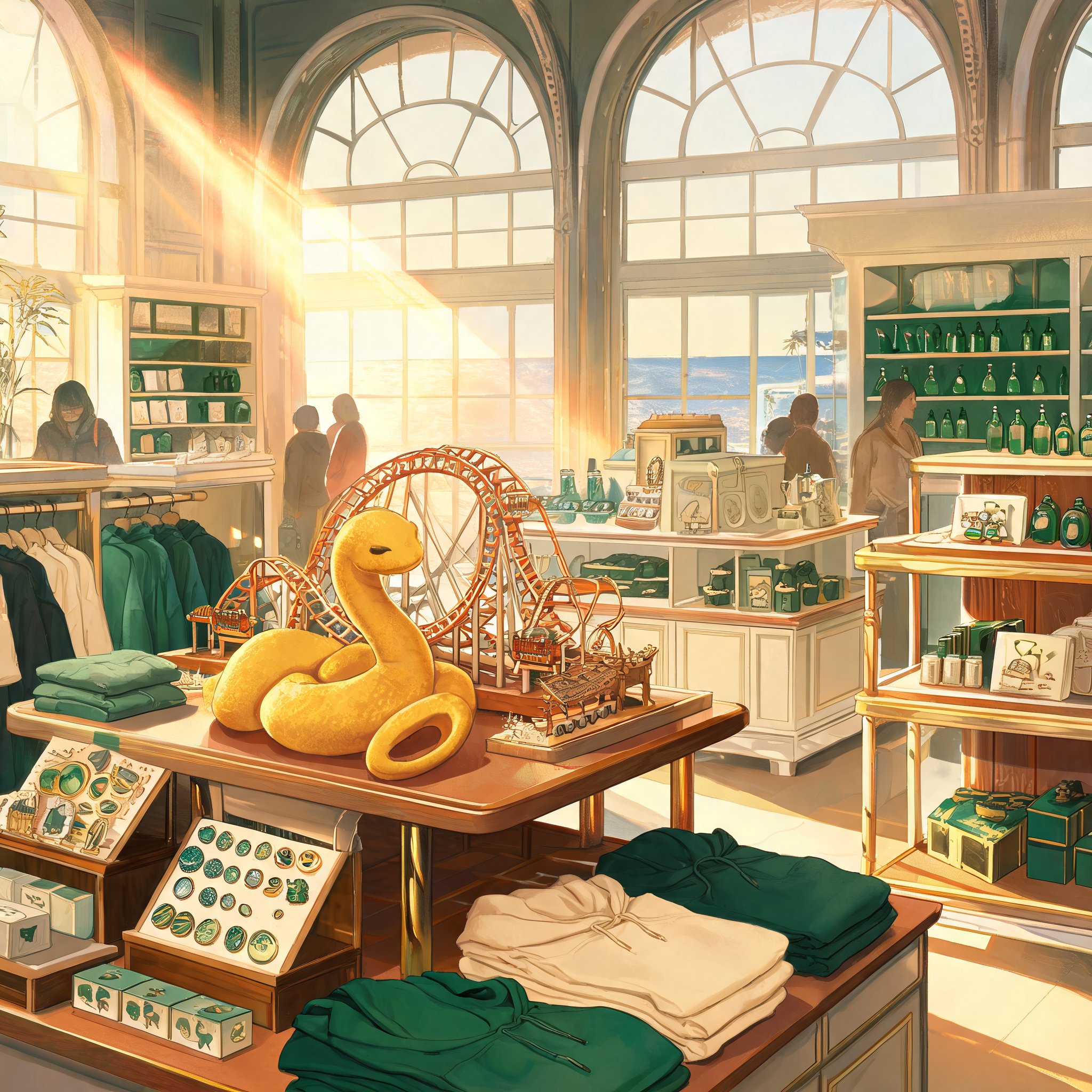
The Aviktas range shows what early involvement can look like. Instead of applying an attraction logo to a set of products, the team built the range around the attraction’s complete visual world: a golden snake, emerald colouring, mythology and mystery. Retail was part of the original creative conversation rather than a later add-on. A run of 50 models priced at £250 each sold out. Jackson presents this as evidence that guests will invest in premium, limited-edition collectables when authenticity, detail and a strong attraction connection are present. The example also marks a boundary: the premium argument depends on a distinctive attraction identity, not simply a higher price.
Product development starts with discussion of the attraction, its audience and the opportunity. The team considers story, visual identity, emotional impact, fashion relevance and the attraction’s long-term role in the wider Pleasure Beach portfolio. ICON lends itself to a clean, contemporary, fashion-led treatment; Big Dipper and Grand National allow archive artwork, engineering details, nostalgia and guest memories to come forward. Materials, colours, proportions, trims, embroidery, packaging and shop presentation are reviewed alongside intended customer, expected demand, price points, production quantities, lead times and sales locations. The final product must be creatively distinctive and commercially viable.
Heritage and playfulness do different jobs. Pleasure Beach’s 130-year history gives it an archive of attraction imagery, typography, posters, architecture and stories that can be reinterpreted through contemporary apparel, homeware and collectables. The aim is not to make everything old-fashioned but to use authentic history in a fresh and desirable way. Playful assets—humour, colour, character and unexpected ideas—keep the range accessible to children, families and casual visitors. Together they produce a retail identity broader than a collection of ride logos.
Licensed IP adds another layer. Nickelodeon and Aardman properties are part of the park experience. Jackson says the strongest partnerships are collaborative: the licensor protects brand integrity, while Pleasure Beach explains what visitors respond to and how products need to work within an attraction environment. The answer to competition from general online retail is relevance and exclusivity: exclusive designs, attraction references, location-specific details, personalisation or products that celebrate the visit. Brand guidelines and approval processes still apply; they are part of the product proposition rather than a substitute for it.
Jackson identifies a shift in demand toward products that feel exclusive, authentic and considered. Attraction-specific merchandise, premium apparel, subtle branding, collectables, limited editions and items with a clear story are growing. Guests also want items they can use or wear beyond the visit: a hoodie, cap, bottle or bag must work as a product in its own right. Enthusiasts look for accurate details, models, technical artwork and recognition of history or engineering. Generic souvenirs and heavily branded products without a story have become less compelling, although keyrings, magnets, mugs and confectionery remain important and must evolve in design, quality and presentation.
The operational argument is less glamorous but decisive. Stock accuracy and availability determine whether a good product can sell. Deliveries, stock movement, replenishment, pricing, signage and daily compliance checks must be right; otherwise an outstanding product can sit in a stockroom, be mispriced or be missing where guests expect it. Clear pricing builds trust, housekeeping affects desirability and replenishment protects the purchase opportunity. Jackson describes retail success as hundreds of small tasks completed correctly and consistently.
Suppliers are treated as creative and commercial partners rather than manufacturers. Pleasure Beach shares the story, ambition and intended customer behind a range; in return, a strong supplier contributes ideas, understands the brand, responds to feedback and can translate a concept into a viable product. Quality, communication, lead times, compliance, pricing and consistency are the reliability tests.
The front line carries the strategy into the visit. Staff provide product knowledge and personality, demonstrate products, explain stories, suggest additions and recognise when help is needed. Retail can also be entertainment: candy floss making, teddy building, bubble demonstrations, ride photography and personalisation. Teams are positioned as hosts, storytellers and brand ambassadors, and their feedback can reveal demand before formal sales reports do. Gift wrapping and personalisation add value for guests who want a purchase to feel personal and difficult to replicate through a general online marketplace.
E-commerce extends the relationship year-round. It serves enthusiasts following launches, previous visitors reconnecting with memories and customers who cannot travel to Blackpool. It also supports social media and email communication, seasonal campaigns and demand testing. Online behaviour can differ from in-park behaviour, giving the retailer another view of which ranges have wider appeal.
Retail is also being planned as part of the guest journey rather than an obligatory exit shop. Themed environments, demonstrations, characterful displays, confectionery experiences, personalisation, ride photography and interactive selling are meant to make shopping part of the day. A shop connected to a major thrill ride should feel different from a children’s character store, a heritage collection or a confectionery outlet. When environment, products and staff tell the same story, retail becomes part of the attraction experience.
The Pleasure Beach case suggests that merchandise can support an attraction’s identity when retail is involved early, ranges are segmented by customer mission and price, and exclusivity is tied to a specific place and story. It also suggests limits. A run of 50 models at £250 sold out, but that does not prove every attraction can support the same price or scarcity. The model relies on a strong archive, distinctive attractions, licensed relationships and disciplined stock execution. Its central lesson is less about adding a logo than about deciding what each product is for, who it serves and why it should exist.