Justin Lombardoni, the ornamental plant breeder at the Chicago Botanic Garden, used a July appearance at the Perennial Plant Association's National Symposium in East Lansing, Mich., to explain how a nonprofit breeding program sets its priorities differently from commercial counterparts. To his knowledge, the garden runs the only breeding program housed at a botanic garden in the country.
Genus selection starts with native plants, though not exclusively. Lombardoni said he prefers to define native at the regional level rather than by county or state lines, because plants do not observe those boundaries, particularly where no physical barrier prevents them from spreading.
When an exotic genus is considered, the program screens for two seed-related traits that can signal invasive potential: fecundity, or how much seed a plant produces, and dispersal, or how readily that seed travels, whether a few feet or much farther. Vegetative spread through rhizomes, stolons or suckers is also weighed. Lombardoni cited kudzu (Pueraria montana) as an extreme example of what can happen when a plant's ability to spread is underestimated.
Because the program is small and its resources limited, it concentrates on niche genera rather than competing head-on with larger commercial breeders. Even if it could compete, he argued, many mainstream genera are already crowded with dozens or hundreds of cultivars. He questioned whether the market needs another Echinacea or Hosta when comparatively esoteric genera remain untapped.
Traits the program avoids
Traits of interest vary by genus, so Lombardoni described what the program does not pursue. The clearest example is highly compact cultivars, which have multiplied in industry breeding over the past decade or two because they present well in pots and ship efficiently. He said he would not be against releasing a promising compact selection but does not actively seek one.
Compact, in his usage, means roughly 30 inches or shorter. A four-foot cultivar bred from a species that normally reaches five or six feet would not qualify. He drew a distinction between reining in the size of an unruly species and releasing a cultivar half the height, or less, of the species it is bred from.
The program also avoids sterility, which in ornamental horticulture can appear as "double" flowers, where extra petals replace pistils or stamens. That can reduce available pollen or make other floral resources harder for pollinators to reach. More broadly, Lombardoni said the program does not seek cultivars with traits that hinder ecological function.
Pollinator support is a stated interest. The garden hopes to collaborate with its Science Department, which is partnered with Northwestern University, to study pollinator visitation to breeding selections and compare it with straight species, which could show how the abundance and diversity of visitors differ between the two. That work is a goal rather than a completed study.
One cultivar as an example
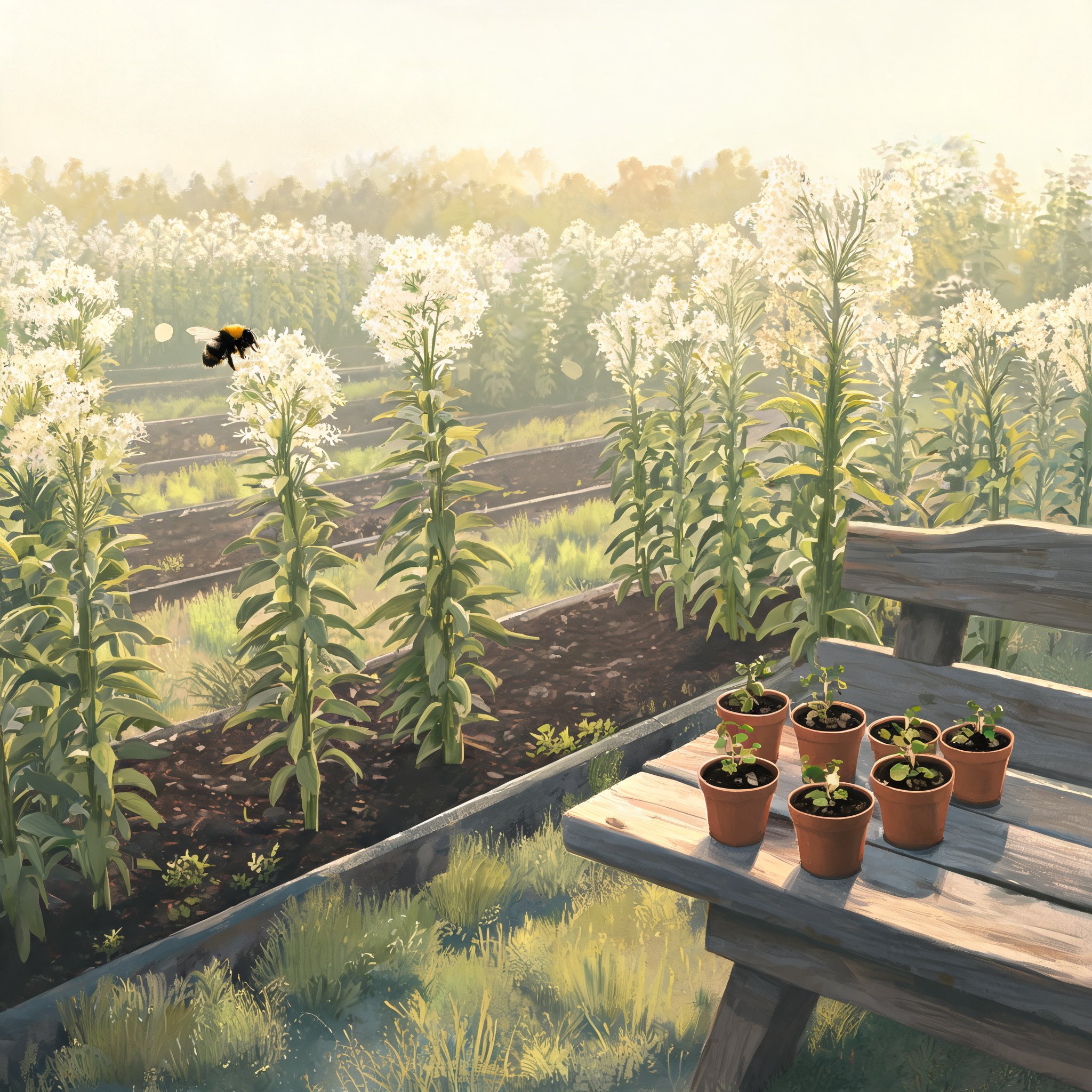
Lombardoni pointed to Eutrochium maculatum 'Summer Snow', released about 10 years ago, as a cultivar that reflects these priorities. Its germplasm was collected roughly 90 miles from the garden, three counties away, but he still considers it a native selection because the species itself is native to the garden's county. At 5 feet tall, it is not significantly shorter than the straight species, and its highly upright stems carry white flowers that support pollinators from mid- to late summer.
Lombardoni acknowledged that aesthetics matter greatly when breeding perennials for the commercial market, particularly how a plant looks in a pot, and that ecological function may not always receive equal emphasis. As a nonprofit, the garden is not working toward a set number of cultivar releases each year or maximum sales for each one, which he said allows it to breed perennials differently. His hope is that gardens will not someday consist entirely of perennials 2 feet or shorter.