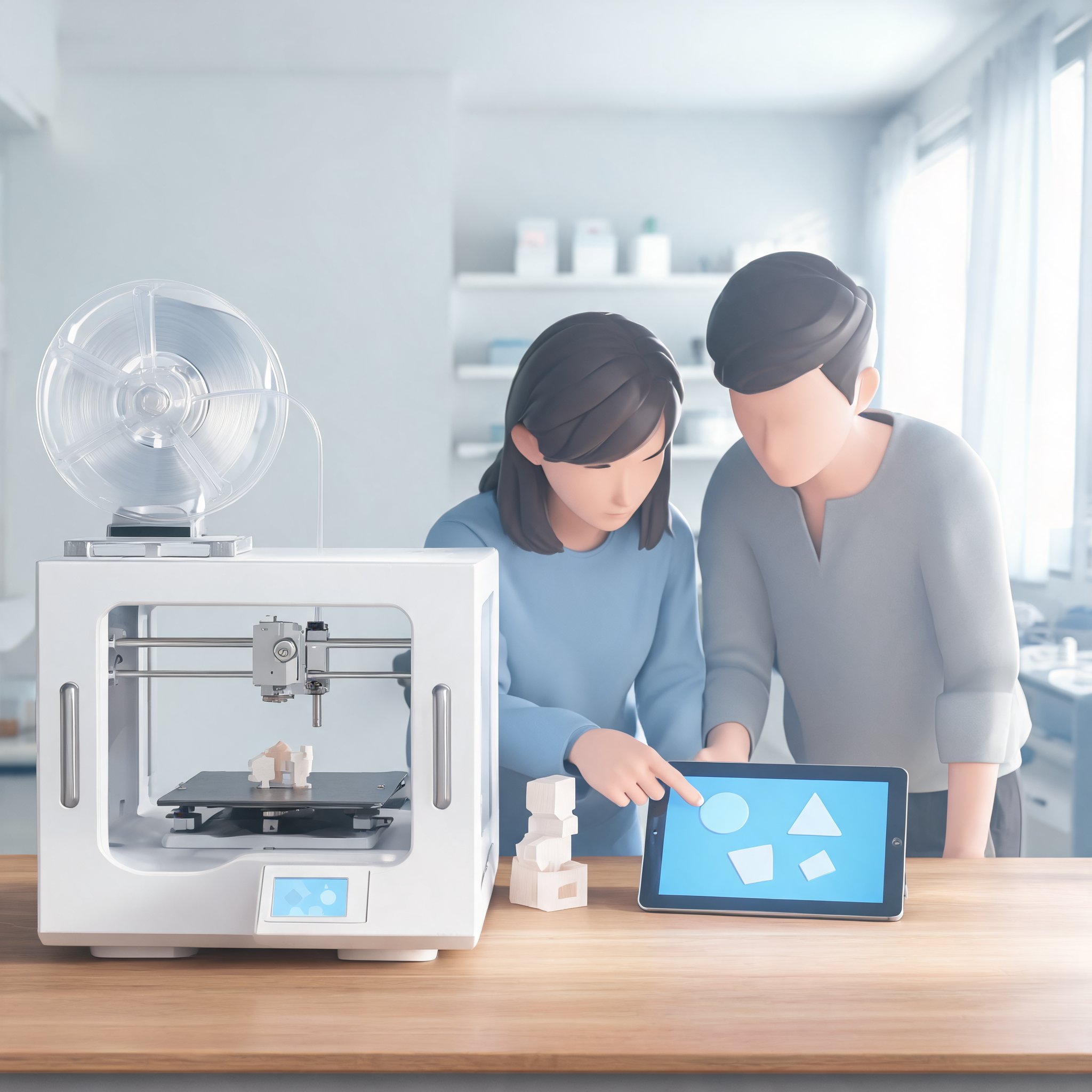
A University of Nottingham-led project has been awarded funding to bring 3D printing into hospital education for children and young people in England. The initiative is intended to widen access to hands-on STEM learning for students who attend specialist schools because of complex health needs or extended hospital stays.
Funding, partners and rollout
The three-year project is being delivered with the National Association for Hospital Education. Funding comes from a Royal Society Science Community Grant and the Julia Rausing Trust. Engineers and scientists from universities around the country are supporting the work by helping staff gain the 3D design and printing skills needed to run practical projects.
In its initial phase, 25 schools will receive a 3D printer and take part in a national training programme led by Nottingham with support from local partner universities. The programme will run across a term through coordinated sessions based on user-centred design and end with a showcase event. Students will be encouraged to draw on their surroundings to identify product designs that could work better for them.
Practical science and student confidence
Sir Paul Nurse, president of the Royal Society, said schools are where most people first meet science. He argued that practical work helps students experience the scientific process, assess evidence, understand uncertainty and see how science can explain and improve the world. He added that embedding more practical science in schools supports future scientists and innovators and helps equip people with scientific literacy.
Professor Ruth Goodridge, who leads the project at Nottingham, said children who spend long periods in hospital or attend specialist schools often miss the enriching, hands-on STEM experiences their peers receive. She said the project is intended to address that gap by offering 3D design and printing activities that can broaden horizons, build confidence and develop useful skills.
Goodridge also noted that hospital school staff report that illness can make a child's world feel small, with disrupted education, anxiety and low confidence affecting engagement. In her view, 3D printing offers an accessible and rewarding way for students to develop skills, solve problems and make something tangible, providing a sense of achievement when other parts of their lives may feel beyond their control. She said the work could also help young people see new possibilities for their futures.
Rehabilitation research and peer connection
The NIHR HealthTech Research Centre for Rehabilitation, led by Nottingham University Hospitals NHS Trust, is partnering on the project. It will explore how 3D printing technologies could contribute to children's rehabilitation and recovery after serious illness or injury.
Stephen Deadman of the National Association for Hospital Education said the project would provide vital skills for children who cannot access traditional school and give them valuable hands-on experience with specialist equipment. He said it would also bring benefits from working together within and between schools, creating a sense of community and shared achievement.
The announcement sets out planned activities and partnerships; it does not report outcomes from the programme.